Who Actually Qualifies as a Good Candidate for a Non-Surgical Facelift?

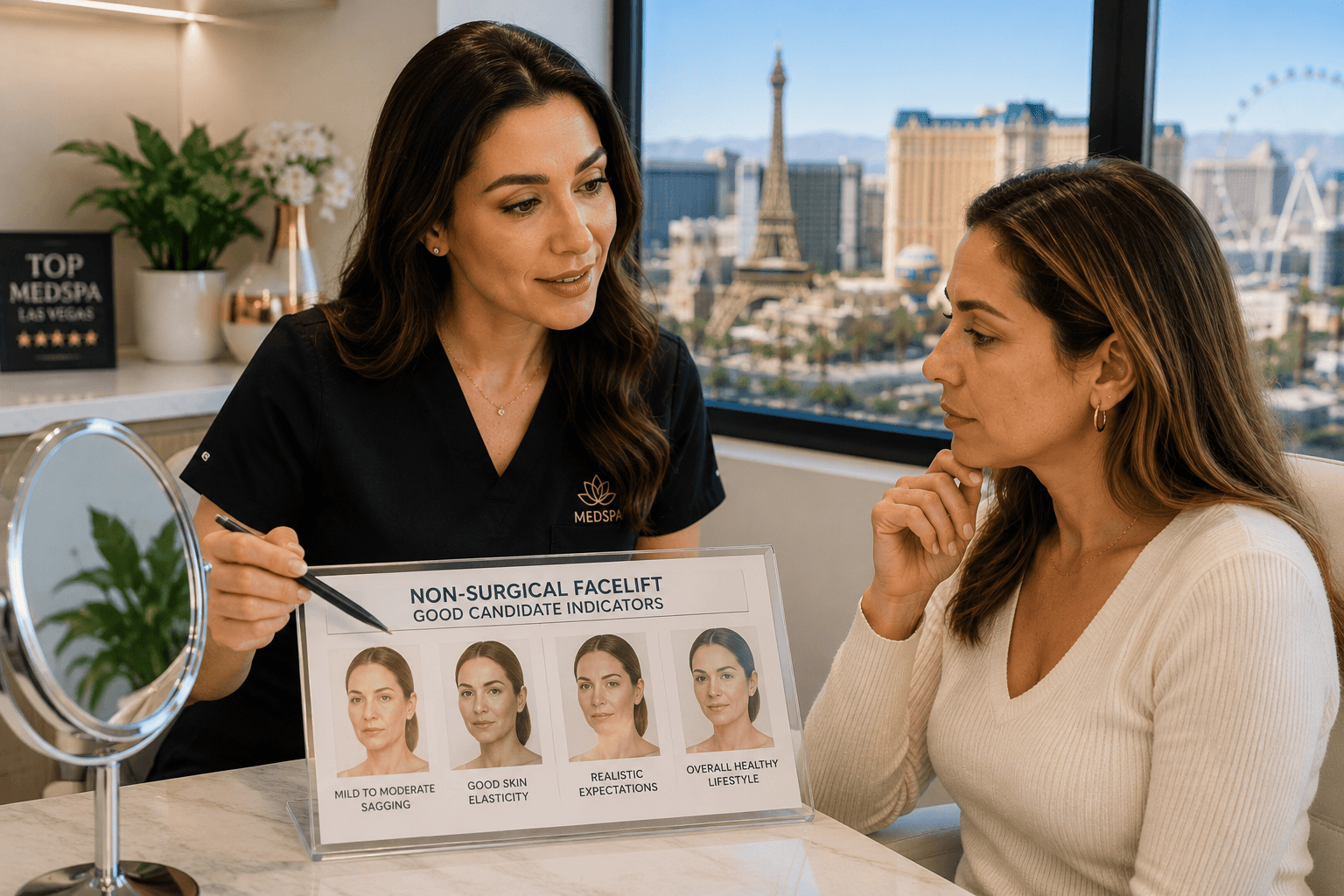
The phrase non-surgical facelift gets used a lot, sometimes loosely, which makes it hard to know if it is actually the right option for your specific situation or if you would be better served by a traditional surgical facelift down the road. The truth is that non-surgical options are not meant to replace surgery for everyone. They are meant to address a specific category of concerns, and knowing whether you fall into that category is the key to setting realistic expectations before you book anything.
What a Non-Surgical Facelift Actually Means
Unlike a traditional facelift, which involves surgically repositioning tissue and removing excess skin, a non-surgical facelift refers to a combination of energy based and injectable treatments designed to lift, tighten, and restore volume using the body's own biological processes rather than surgical alteration. At No. 1 MedSpa, this typically involves treatments like Emface, which uses a combination of energy technologies to lift and tone facial muscles and improve skin quality without incisions or downtime.
Signs You Might Be a Good Candidate
You Are Noticing Early to Moderate Sagging, Not Significant Excess Skin
Non-surgical options work best for people experiencing early to moderate sagging skin or loss of elasticity, where the underlying facial structure is still relatively intact. If you are noticing your jawline is a little less defined than it used to be, or your cheeks have started to look slightly less lifted, this is generally the range where non-surgical treatment can make a meaningful visible difference.
You Want to Delay Surgery, Not Necessarily Avoid It Forever
A lot of people in their late thirties through fifties choose non-surgical facelift options specifically to slow down visible aging and delay the point at which they might consider surgery, rather than expecting the same dramatic result a surgical facelift would provide. This is a completely reasonable and common goal.
You Are Looking for No Downtime
Because non-surgical treatments do not involve incisions, most people return to their normal routine the same day, which is a significant draw for anyone who cannot take extended time off for recovery.
Signs Surgery Might Be a Better Fit
You Have Significant Excess Skin
If your primary concern is a substantial amount of loose or excess skin rather than muscle tone or mild sagging, a surgical facelift is generally better equipped to address that specific concern than a non-surgical option, since surgery physically removes excess tissue in a way non-surgical treatments cannot replicate.
You Are Hoping for a Dramatic, Immediate Transformation
Non-surgical results build gradually as the body responds to the treatment over weeks. If you are looking for a significant change visible immediately after a single appointment, that expectation aligns more closely with surgical results than non-surgical ones.
What Results From a Non-Surgical Facelift Actually Look Like
Results from treatments like Emface tend to build gradually over the weeks following treatment as facial muscles respond and skin quality improves. Many clients notice a subtle lift and firmer appearance rather than a dramatic overnight change, which is often exactly the natural looking outcome most people are hoping for.
How Long Results Typically Last
Because these treatments work with your body's own muscle tone and collagen production, results are not permanent in the way surgery can be, and most clients schedule maintenance sessions periodically to sustain their results over time.
Combining Treatments for a More Complete Result
Many clients considering a non-surgical facelift are also dealing with related concerns like volume loss or skin laxity, and providers often recommend combining muscle toning treatments with complementary options like skin tightening or filler to address the full picture rather than a single isolated concern.
Frequently Asked Questions
Is a non-surgical facelift as effective as surgery? It addresses a different range of concerns than surgery. It works well for early to moderate sagging and muscle tone loss, but it is not designed to replace surgery for significant excess skin.
How long do results from a non-surgical facelift last? Results build gradually and typically last for a period of months before maintenance treatment is recommended to sustain them, since the treatment relies on ongoing muscle tone and collagen support rather than permanent surgical alteration.
Is there any downtime after treatment? Most non-surgical facelift treatments involve little to no downtime, allowing most clients to return to their normal schedule the same day.
At what age should I consider a non-surgical facelift? There is no single correct age. Many clients begin exploring non-surgical options in their late thirties through fifties as a way to address early sagging and delay more invasive procedures.
Can a non-surgical facelift be combined with other treatments? Yes. Many clients combine muscle toning treatments with complementary options addressing volume loss or skin laxity for a more complete result.
So, Ready to Meet the Version of Facelift That Skips the Scalpel?
A non-surgical facelift is not a universal replacement for surgery, but for the right candidate, it offers a meaningful, natural looking lift without the downtime or permanence of going under the knife. Understanding where your own concerns fall on that spectrum is the best first step toward the right decision.
To learn more about your options, visit our Emface service page or explore related concerns like sagging skin and loss of elasticity. You can also browse our full face and body contouring services to see how treatments can be combined for a complete approach.