What's Really Causing That Sagging Feeling in Your Face, and What Can You Do About It in Las Vegas?

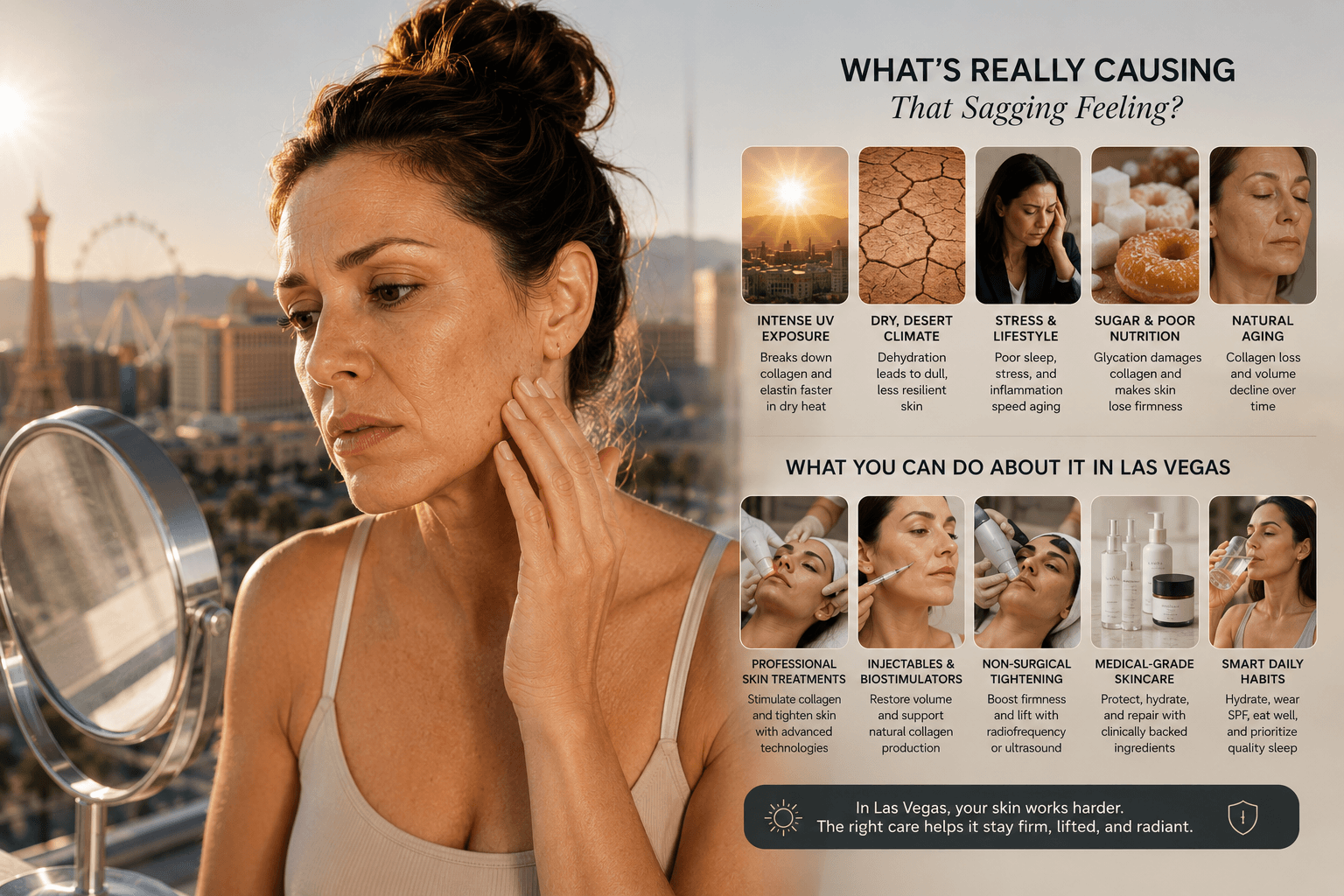
If you have caught yourself pulling at your cheeks in the mirror or noticing your brow sitting a little lower than it used to, you are not imagining things. Facial sagging is one of the most common concerns people bring up once they hit their thirties, forties, and beyond, and it rarely happens overnight. It creeps in slowly, and by the time it is noticeable, most people are left wondering whether they need a surgical facelift, a cream from the drugstore, or something in between.
The truth is there is a lot of middle ground, and understanding what is actually happening beneath your skin is the first step toward choosing the right fix. This guide walks through why sagging happens, what separates surgical from non-surgical skin lifting, and how treatments available right here in Las Vegas, Nevada can help restore a firmer, more lifted appearance without an operating room. Updated for August 2026 to reflect the latest options at No. 1 Medspa in Las Vegas.
Why Does Facial Skin Start to Sag in the First Place?
Sagging is not just about "loose skin." It is the result of several structural changes happening at once, and understanding them helps explain why some treatments work better than others.
Collagen and Elastin Decline With Age
Collagen and elastin are the proteins that give skin its bounce and structure. Starting in your mid-twenties, natural collagen production begins to slow, and by your forties it can drop significantly. Less collagen means less scaffolding, which is one of the main reasons skin starts to feel softer and less snapped-back than it used to.
Loss of Facial Volume and Structural Support
Underneath the skin, fat pads and bone structure provide support the way a tent pole holds up canvas. As those fat pads shift and shrink with age, the skin that once sat snugly against them starts to droop. This is closely tied to facial hollowing, especially in the cheeks and temples, where volume loss can make sagging look more pronounced than it actually is.
Muscle Laxity and Repeated Movement
Facial muscles work constantly, whether you are talking, smiling, or squinting at your phone. Over time, those muscles can lose tone just like muscles anywhere else in the body, which contributes to a tired or heavier look, particularly around the brow and jawline.
Gravity and Cumulative Sun Exposure
Gravity is relentless and never takes a day off, and in a sun-heavy city like Las Vegas, UV exposure accelerates collagen breakdown even further. The combination of gravity pulling down and thinner, less elastic skin resisting less is what eventually leads to visible sagging.
What Are the Common Signs of Facial Sagging?
People often do not use clinical terms to describe what they are seeing. Instead, they notice things like a heavier upper eyelid, a brow that sits lower than it did a few years ago, jowls forming along the jawline, or cheeks that seem to have "fallen" rather than simply aged. These are all closely connected. Brow droop and eyelid laxity frequently show up together, and general sagging skin throughout the mid and lower face often becomes noticeable around the same time.
Surgical Facelift vs Non-Surgical Skin Lifting: What Is the Difference?
This is one of the most common questions people search before they even know what treatment to look for.
How a Surgical Facelift Works
A traditional facelift involves incisions, tissue repositioning, and a recovery period that can stretch several weeks. It offers dramatic, longer-lasting results, but it also comes with the risks, downtime, and cost associated with any surgical procedure.
How Non-Surgical Skin Lifting Works
Non-surgical lifting takes a different approach. Rather than cutting and repositioning tissue, these treatments use focused energy, whether that is ultrasound or targeted muscle stimulation, to encourage the body's own collagen production and improve muscle tone from within. The results build gradually and look natural, and there is no incision or extended downtime involved.
For many people who are not ready for surgery, or who simply prefer to avoid it altogether, non-surgical skin lifting has become the more approachable starting point, especially for early to moderate sagging.
Who Is a Good Candidate for Non-Surgical Skin Lifting?
Non-surgical options tend to work best for people who are noticing early to moderate signs of sagging rather than significant, advanced skin laxity. If your concerns are things like a slightly heavier brow, softening jawline definition, or cheeks that have lost a bit of their lift, you are likely a strong candidate. People in their thirties through sixties commonly explore these treatments, and because there is no surgery involved, candidates generally need to be in good overall skin health without active infections or certain skin conditions in the treatment area.
The best way to know for sure is a consultation, where a provider can evaluate your skin's elasticity, volume, and muscle tone in person.
How Ultherapy Prime Lifts Skin Without Surgery
Ultherapy Prime uses focused ultrasound energy to reach the deeper layers of tissue, the same structural layer that surgeons address during a facelift, without ever breaking the skin. That energy stimulates new collagen production over time, which gradually lifts and tightens the brow, jawline, and neck area.
What makes this approach appealing is the way it works with your body's own healing response. Results are not instant. Instead, they build over two to three months as collagen regenerates, and many people continue to see improvement for up to six months after treatment. It is a popular option for people managing early brow droop or a jawline that has started to lose its crisp definition.
How Emface Restores Lift by Targeting Facial Muscles
While Ultherapy Prime works on the skin's deeper structural layer, Emface takes a different but complementary route by targeting the facial muscles themselves. Using a combination of radiofrequency energy and targeted muscle stimulation, Emface works the way a gym session works your body, toning and lifting the underlying facial muscles that support your skin.
Because Emface addresses muscle tone rather than just the skin's surface, it is particularly effective for people whose sagging is tied to weakened facial muscles rather than only volume or collagen loss. It requires no needles and no downtime, which makes it easy to fit into a lunch break in a busy Las Vegas schedule.
For some patients, combining structural lifting with muscle toning offers a more complete result than either treatment alone, and a provider can help determine the right approach during a consultation.
Can Skin Tightening Treatments Help Too?
For patients looking for additional firmness alongside a lifting treatment, TempSure Firm is another option worth discussing. It uses radiofrequency heat to support collagen renewal and improve overall skin firmness, and it can work well as a complementary step for people who want to address mild skin laxity in areas beyond the primary lifting zones. This is not a replacement for structural lifting treatments, but it can round out a broader plan for facial rejuvenation.
What Should You Expect During Treatment and Recovery?
One of the biggest draws of non-surgical skin lifting is the lack of significant downtime. Most patients describe Ultherapy Prime as producing a warming or tingling sensation as the ultrasound energy reaches the deeper tissue layers, and any redness typically fades within a few hours. Emface sessions feel more like a muscle contraction, similar to an intense workout for your face, and patients can generally return to normal activities immediately afterward.
Results are gradual by design, since both treatments work by encouraging your body's natural collagen and muscle response rather than forcing an immediate change. Patience pays off here, and most providers recommend giving results a few months to fully develop before evaluating whether a follow-up session makes sense.
To see how these results look on real patients, it can help to browse real before and after examples before deciding which treatment path feels right for you.
Frequently Asked Questions About Skin Lifting
Is non-surgical skin lifting as effective as a facelift? Non-surgical skin lifting will not produce the same dramatic, immediate results as surgery, but for early to moderate sagging it can offer meaningful, natural-looking improvement without incisions or downtime. Many patients are happy to avoid surgery altogether when their concerns are caught early.
How long do skin lifting results from Ultherapy Prime or Emface last? Results vary by individual, but most patients enjoy improvements for around a year or longer before considering a maintenance session, since the natural aging process continues in the background.
At what age should I start considering skin lifting treatments? There is no universal age. Some people begin noticing early brow droop or jawline softening in their mid-thirties, while others do not consider treatment until their fifties or sixties. The right time is really whenever sagging starts affecting your confidence.
Does skin lifting hurt? Most patients describe a warming or tingling sensation during Ultherapy Prime and a muscle-contraction feeling during Emface, both of which are generally well tolerated without the need for extensive numbing or recovery time.
Can I combine Ultherapy Prime and Emface for better results? Yes, many patients combine structural lifting with muscle toning for a more comprehensive approach, since one treatment addresses the skin's deeper support layer while the other strengthens the muscles underneath. A provider can help design a plan based on your specific concerns.
Is skin lifting only for the face, or can it help the neck too? Ultherapy Prime is commonly used on the neck as well as the face, since sagging in that area is often driven by the same underlying collagen and structural changes.
Ready to Turn Back the Clock, Gravity Optional
Facial sagging might be a natural part of getting older, but that does not mean you have to simply accept it as your new normal. Whether your main concern is a heavier brow, softening jawline, or cheeks that have lost their lift, understanding the "why" behind sagging makes it much easier to choose the right path forward. For many people in Las Vegas, that path starts with non-surgical skin lifting options like Ultherapy Prime and Emface, both of which work with your body rather than against it.
If you are curious which approach fits your skin and your goals, the team at No. 1 Medspa in Las Vegas can walk you through your options and build a plan around what you actually need. Explore the full range of face and body contouring treatments available, or reach out to schedule a consultation and start the conversation about getting your lift back, no scalpel required.