Why Does Skin Start to Sag, and What Can You Actually Do About It?

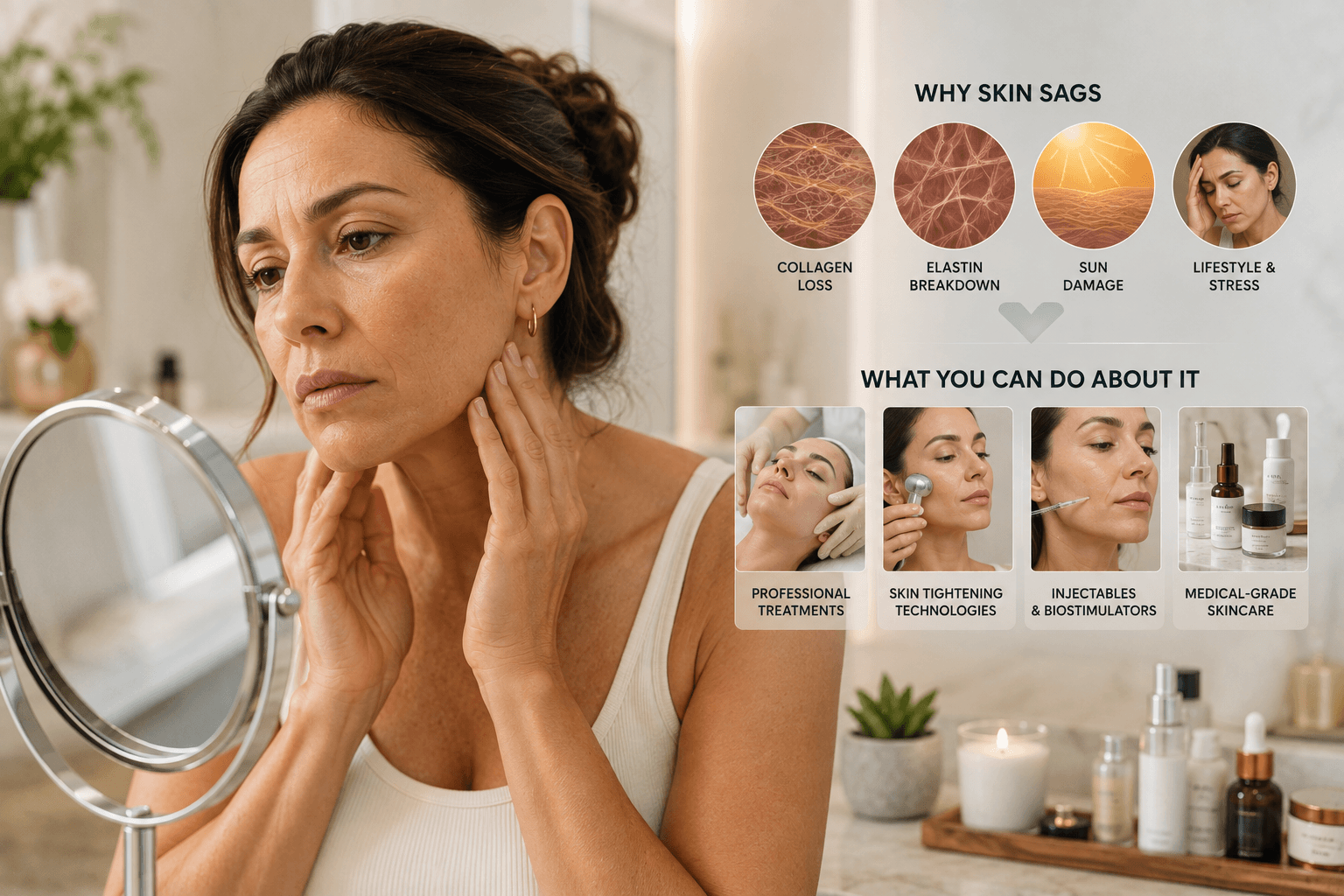
You notice it before you can name it. Maybe it is your jawline looking a little less defined in photos, or the skin along your neck catching a shadow it never used to. Maybe your cheeks feel softer, less "held up," than they did a few years ago. Most people do not wake up one day and think "I need skin tightening." They just start noticing that their skin feels looser, less bouncy, and a bit tired even when they are not.
That gradual loosening has a name: skin laxity. It is one of the most common concerns we hear about at our Las Vegas practice, and it is also one of the most misunderstood. People often assume sagging skin means they need a facelift, or that nothing short of surgery will help. In reality, there is a lot of ground between "doing nothing" and "going under the knife," and understanding what is actually happening beneath the surface is the first step toward choosing the right path forward.
This piece is updated for August 2026 and walks through why skin loses its firmness, how to recognize the early signs, what you can do to slow it down, and when it makes sense to explore a professional treatment like skin tightening.
What Is Skin Laxity, and Why Does It Happen?
Skin laxity is simply the medical term for skin that has lost its firmness and elasticity, causing it to sag, droop, or feel less "snapped back" than it used to. It shows up differently depending on where it happens: jowls along the jawline, looseness under the chin, crepey texture on the neck or upper arms, or a general softness across the cheeks and midface.
The Role of Collagen and Elastin
Your skin's firmness depends heavily on two proteins: collagen, which gives skin its structure and strength, and elastin, which allows it to stretch and bounce back. Starting in your mid to late twenties, collagen production begins to decline at a steady pace, and that decline accelerates during and after menopause for many women. Less collagen means less scaffolding, and the skin gradually becomes thinner and looser.
Sun Exposure and Environmental Damage
Here in Las Vegas, sun exposure is a year round reality, and UV rays are one of the fastest ways to break down existing collagen while slowing new production. Dermatology researchers have long pointed to cumulative sun damage as one of the leading accelerators of visible skin aging, often outweighing genetics alone. If you have spent years enjoying the desert sunshine without consistent SPF, your skin may show more laxity than someone the same age who was more diligent about sun protection.
Gravity, Weight Changes, and Time
Gravity is constant and patient. Over decades, it gradually pulls on skin that has less elastic support to resist it. Significant weight loss or weight fluctuations can also leave behind loose skin, since the skin does not always shrink back down at the same rate the body changes. None of these factors work in isolation. They compound over time, which is why skin laxity tends to become more noticeable in your late thirties, forties, and beyond.
What Are the Signs of Sagging Skin?
Recognizing skin laxity early can help you address it before it becomes more pronounced. Common signs include:
- Skin that feels looser or less firm to the touch, particularly along the jawline, neck, or cheeks
- Jowls or a softened jawline contour
- A less defined chin to neck angle, sometimes called submental laxity
- Crepey or thin looking skin on the neck, chest, or arms
- Skin that appears to "hang" slightly rather than sit close to the underlying structure
- Fine lines that seem to deepen as the surrounding skin loses support
If you are noticing several of these at once, you are not imagining it. This is a very normal, very common part of the aging process, and it is one that a lot of people search for answers about before they ever set foot in a med spa. You can explore more about this specific concern on our skin laxity and sagging skin pages, which outline how these changes typically present.
Can You Prevent Skin From Sagging?
You cannot stop time, but you can absolutely slow the process down. A few habits make a meaningful difference over the years:
Protect Your Skin From the Sun Daily
Since Las Vegas sees strong UV exposure most of the year, daily broad spectrum sunscreen is one of the single most protective habits for maintaining collagen. The American Academy of Dermatology consistently ranks sun protection as a top defense against premature skin aging.
Support Collagen From the Inside Out
A diet rich in protein, vitamin C, and antioxidants gives your body the building blocks it needs to keep producing collagen. Staying hydrated also helps skin maintain elasticity and resilience.
Avoid Smoking and Limit Alcohol
Both habits are known to accelerate collagen breakdown and can make skin laxity appear earlier and more severely.
Maintain a Stable, Healthy Weight
Because dramatic weight swings contribute to loose skin, working toward gradual, sustainable changes rather than rapid loss can help skin adjust more evenly over time.
Even with excellent habits, though, genetics and the natural aging timeline eventually catch up with everyone. That is when many of our patients start asking what their next step should look like.
When Should You Consider Professional Treatment?
There is no single "right" moment to seek treatment for sagging skin. Some people come in the moment they notice early changes because they want to stay ahead of it. Others wait until laxity is more visible in photos or video calls. A good general guide is to consider a consultation if:
- Loose or crepey skin bothers you when you look in the mirror or see photos
- You have tried topical products and lifestyle changes without seeing meaningful improvement
- You are looking for a non-surgical option before considering more invasive procedures
- You have experienced weight loss and are left with skin that feels less firm
If any of that sounds familiar, it may be time to explore what skin tightening can realistically do for your skin, rather than guessing based on internet searches alone.
How Does Skin Tightening Actually Work?
This is where radiofrequency technology comes in. At our practice, we offer XERF RF Skin Tightening, a non-surgical treatment that uses controlled radiofrequency energy to heat the deeper layers of the skin. That gentle, targeted heat stimulates the skin's own collagen production and encourages existing collagen fibers to contract and tighten.
Unlike surgical options, there are no incisions and essentially no downtime, which makes it appealing for people who want visible improvement without stepping away from their normal routine. Results tend to build gradually as the body generates new collagen over the following weeks, giving skin a firmer, smoother, more supported appearance.
For patients who want an additional radiofrequency option in their treatment plan, we also offer TempSure Firm, which uses similar heat based technology and can be tailored depending on the treatment area and your specific goals. Both fall under our broader face and body contouring offerings, and during a consultation we can help determine which approach, or combination, fits your skin best.
We also understand that concerns like loss of elasticity rarely show up alone. Many patients dealing with skin laxity are also managing volume loss or textural changes, so treatment plans are often built to address the fuller picture rather than a single symptom.
What Results Can You Expect?
Radiofrequency skin tightening is not designed to replicate what a surgical facelift does, and a reputable provider will be upfront about that. What it does offer is a noticeable improvement in skin firmness and texture, with results that tend to look natural rather than "done." Most patients describe their skin as feeling tighter and looking more lifted, particularly along the jawline, neck, and cheeks. You can see real patient outcomes on our before and after page to get a sense of what is achievable.
Because everyone's skin, age, and goals are different, the number of sessions and expected timeline vary from person to person. This is exactly the kind of detail worth discussing directly with a provider rather than assuming based on generic information online.
Frequently Asked Questions
Does skin tightening actually work for sagging skin? Yes, for the right candidates. Radiofrequency based skin tightening stimulates collagen production, which can visibly firm and lift skin that has started to sag due to aging, sun exposure, or weight changes. Results are gradual and natural looking rather than immediate or dramatic.
At what age should I start thinking about skin tightening treatments? There is no fixed age, but many people first notice early signs of skin laxity in their late thirties to mid forties. Some choose to start skin tightening treatments proactively at the first signs of looseness, while others wait until sagging becomes more visible.
Is skin tightening painful or does it require downtime? Most patients describe the sensation as warm rather than painful, and there is little to no downtime with radiofrequency treatments like XERF RF Skin Tightening. You can typically return to normal activities the same day.
What is the difference between skin tightening and a facelift? Skin tightening is a non-surgical treatment that uses energy based technology to stimulate your body's own collagen, while a facelift is a surgical procedure that physically repositions tissue. Skin tightening offers a more subtle, no downtime option for those not ready for surgery.
How many sessions of skin tightening will I need? This depends on your skin's current condition, your goals, and the treatment area. A consultation is the best way to get a personalized recommendation based on your specific level of skin laxity.
Can skin tightening help with sagging skin after weight loss? It can be a helpful option for mild to moderate skin laxity following weight loss, since it encourages the skin to firm and contract. More significant looseness may require a combination approach, which is something we can discuss during a consultation.
The Bottom Line on Bouncing Back
Sagging skin is not a flaw, it is simply your skin telling you a very human story about time, sun, and life. The good news is that story does not have to end with resignation. Between daily sun protection, smart lifestyle habits, and non-surgical treatments like radiofrequency skin tightening, there is a real, achievable path toward skin that feels firmer and looks more like you remember.
If you have been noticing changes and want an honest, personalized assessment, the team at No. 1 Medspa in Las Vegas would be glad to walk you through your options. Reach out today to schedule a consultation and find out what your skin is truly capable of.